By Dr Dan Hungerford, Senior Lecturer in Infectious Disease Epidemiology, University of Liverpool
I’m a public health researcher and infectious disease epidemiologist. My work focuses on understanding how vaccine programmes perform in the real world, particularly whether they help reduce health inequalities or whether everyone benefits equally. I’m interested in turning evidence into something practical helping shape vaccine policy and delivery so that it works better for everyone.
My interest in this area was sparked by working on a large measles outbreak in Liverpool in 2012. That experience showed me how important it is to connect research with action. Since then, much of my work has focused on rotavirus vaccination, vaccine equity and using surveillance data to understand the impact of vaccines across different communities.
What does epidemiology bring to creative health?
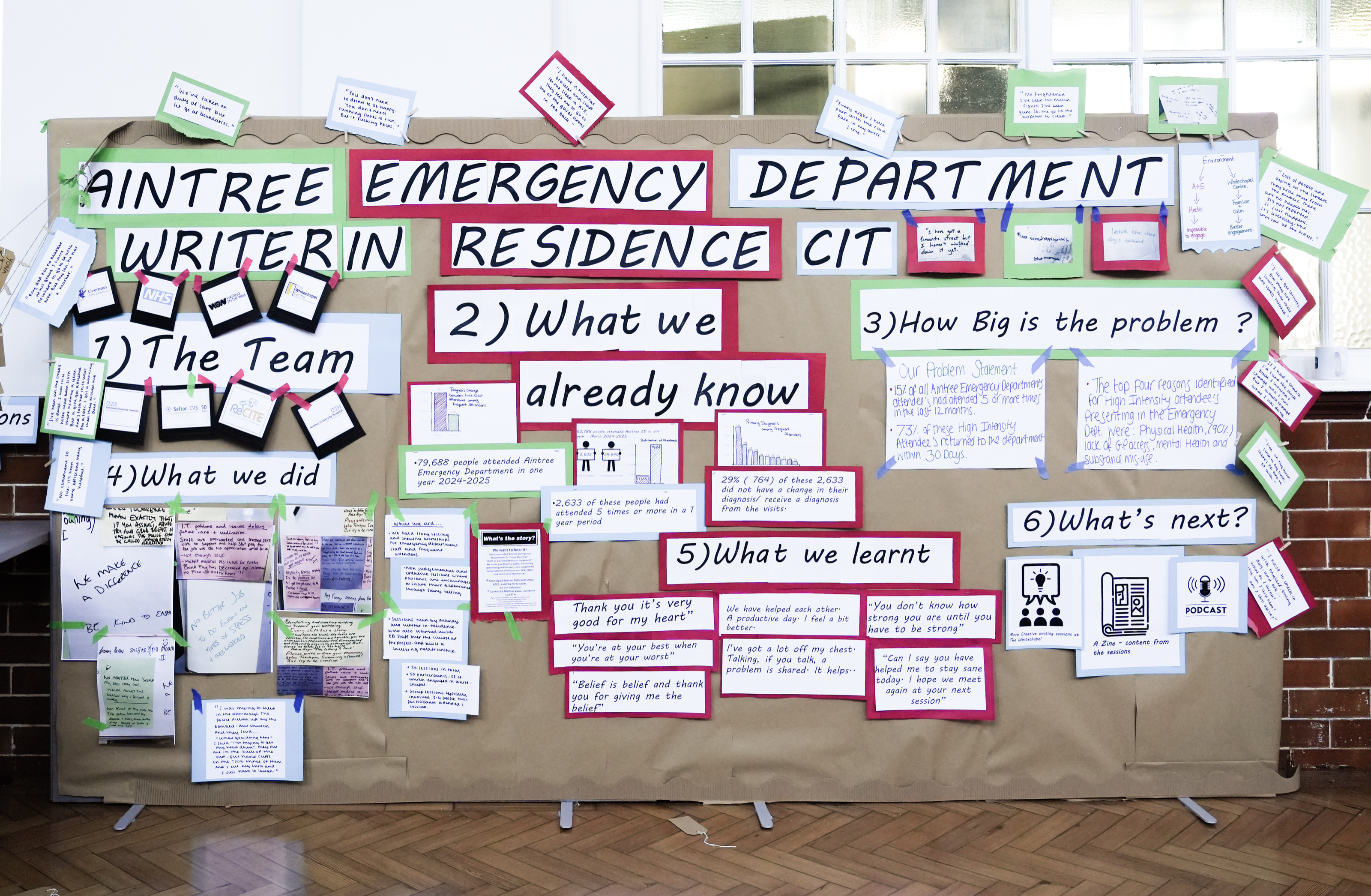
My role has been to help design the evaluation of some of the Community Innovation Teams (CITs) - community-led groups working with ReCITE to develop and explore creative responses to local health inequalities. I’ve particularly been involved with the Immunisation CITs and the High Intensity User CIT, which works with people who frequently use emergency care, thinking about how we assess what their work is achieving and, importantly, how we capture their effects in a meaningful way.
That isn't always straightforward. We might not expect an intervention to produce an immediate measurable change in a health outcome. So, part of my role has been thinking about what other indicators might tell us that an intervention is influencing the right conditions for better health i.e. changes in access, engagement, service use or other measures further up the causal pathway.
This has reinforced something that I think is particularly important when we talk about research and evidence:
Evidence is rarely one-dimensional
One of the biggest things I’ve learned through ReCITE is the importance of combining stories and narratives with statistics. If you want to influence policy or change practice, evidence needs to reflect the fact that there are people involved at every stage of the process. Human decisions are shaped by context, experience and values as much as by data.
That means being careful about assuming that evidence comes in one size fits all. Communities are complex and diverse, and if we want research to lead to meaningful change, it has to reflect that complexity.
Some of the most valuable insights can come from understanding lived experience, local priorities and the pathways through which change might happen, rather than looking only for a single headline outcome.
The breadth of topics chosen by the CITs has been particularly striking. It demonstrates how differently communities can experience health inequalities, and how locally grounded responses need to be. It has also been a reminder that the challenges people face are interconnected.
This is particularly important when we think about vaccination. The inequalities we see in vaccine uptake are not simply a vaccine problem. They sit within wider social, structural and health-system issues. The Health Heroes and Lighthouse CITs at the Liverpool Women’s Hospital, for example, approached vaccination as part of a wider wellness journey rather than as a standalone intervention.
We need to stop tackling these problems in silos.
Community-led approaches are not an add-on
These examples demonstrate why community-led approaches have real potential to address health inequalities but only when they are backed by genuine power, trust and long-term investment.
Community-led work cannot compensate for an under-resourced wider system. For childhood vaccination, for example, investment in early years services, restoring health visiting capacity and strengthening local welfare support are all important because they can help reduce the financial and psychosocial pressures that sit behind unequal access to healthcare.
Working with the CITs and the wider ReCITE team has also shown me the value of bringing different disciplines and approaches together around a shared goal. At the same time, it has highlighted some of the practical barriers that remain, even within a funded research project. The quality of existing data and challenges around effective data sharing with community teams and the populations those data represent can make it harder to target support precisely and to carry out timely, robust evaluation.
That also changes how I think about impact.
Impact is more than a headline outcome
Impact in a project like ReCITE is about much more than conventional research measures. Some of the most important outcomes are the ones that stay with people: the legacy of being involved in a CIT, the skills gained, the confidence built and the quality of the ideas that teams have developed.
The Lighthouse CIT demonstrated the value of the creative health skills and experience that CIT members developed through the process. Another example that has stayed with me is the AMR (Anti-Microbial Resistance) CIT, which used a map containing information about day-to-day basics to communicate public health information to newly arrived asylum seekers and refugees. It was a simple idea, but brilliantly effective.
The creative approach has helped me see some of the wider benefits to the people involved in the CITs: the skills they have learned, the confidence they have gained and the remarkable amount communities can achieve with relatively little funding.
It has made me think about something that is often missing from conventional scientific reporting: passion, creativity and context. These may be difficult to capture in a scientific report, but they are an important part of what makes initiatives work.
Creativity changes who gets to engage with research
And perhaps this is where the experience of ReCITE has something to say not just about how we do research, but about how we communicate it.
At the Liverpool learning event in June 2026, I was struck by how engagingly the CITs shared their research journeys. Rather than following the conventions of a traditional academic presentation, they used storyboards to bring the people and groups behind the work into the room. Being in a small group and close to the presenters created a much more direct and human connection to the work.
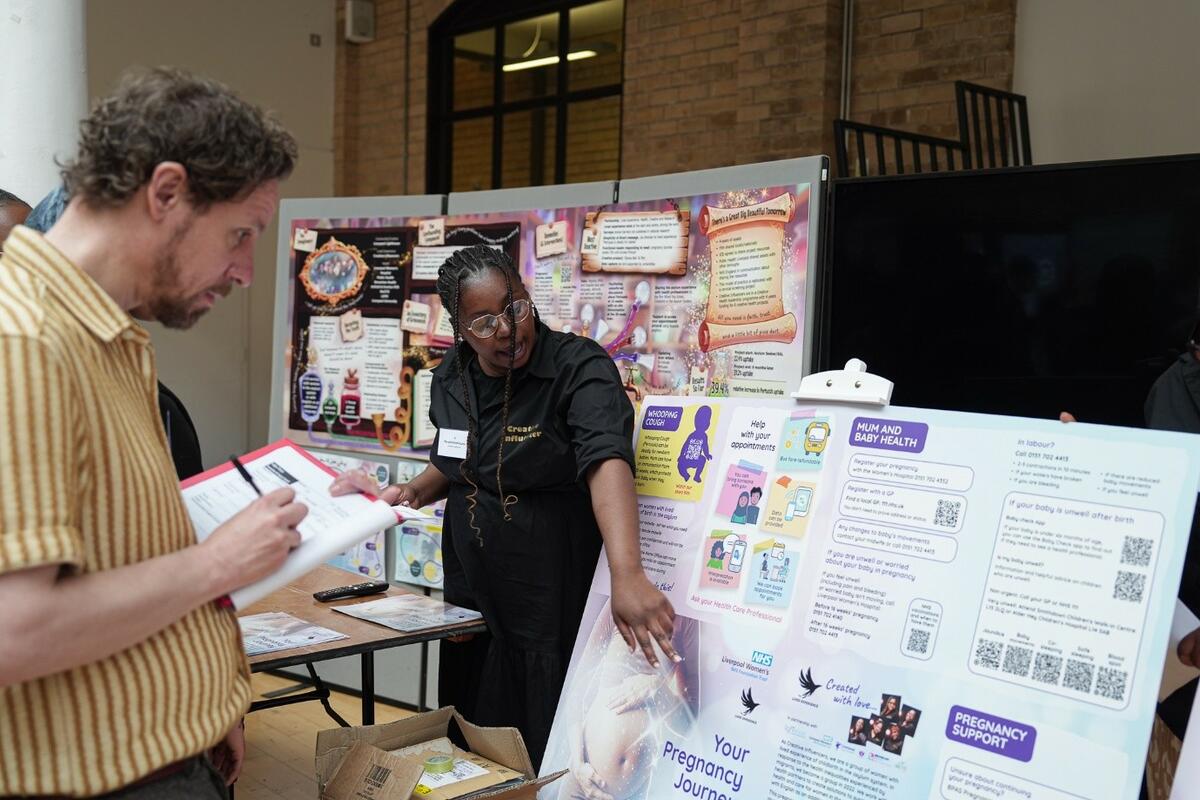
The shared responsibility for presenting worked particularly well too. It reflected the collaborative nature of the projects themselves and made the presentations feel more authentic and inclusive.
It made me think about how researchers communicate their own work.
We spend a huge amount of time generating evidence, but perhaps less time thinking about how that evidence is experienced by the people who encounter it. If we want people to engage with research, it isn't enough simply to make it accessible. We need to think about whether we are making people want to engage with it.
For me, that means designing with and for the intended audience. It means thinking about where we share research as well as how we share it. Academic settings have their place, but they aren't necessarily always the best place to communicate findings to the people we want to reach. Community spaces can be trusted and accessible in ways that academic environments aren't.
There is a place for both approaches. The important thing is to involve the intended audiences in designing how research is communicated.
Perhaps the wider lesson from ReCITE for me is that doing research differently requires us to remain open minded about what research can look like, how evidence can be understood and what impact can mean.
If we want research to lead to meaningful change, we need to be prepared to embrace different approaches, different perspectives and different ways of communicating what we learn.
Do it. Embrace creativity in your approaches. And be open minded.
BACK to ReCITE
|
ReCITE is funded by the Arts and Humanities Research Council (AHRC), part of UK Research and Innovation. |
 |