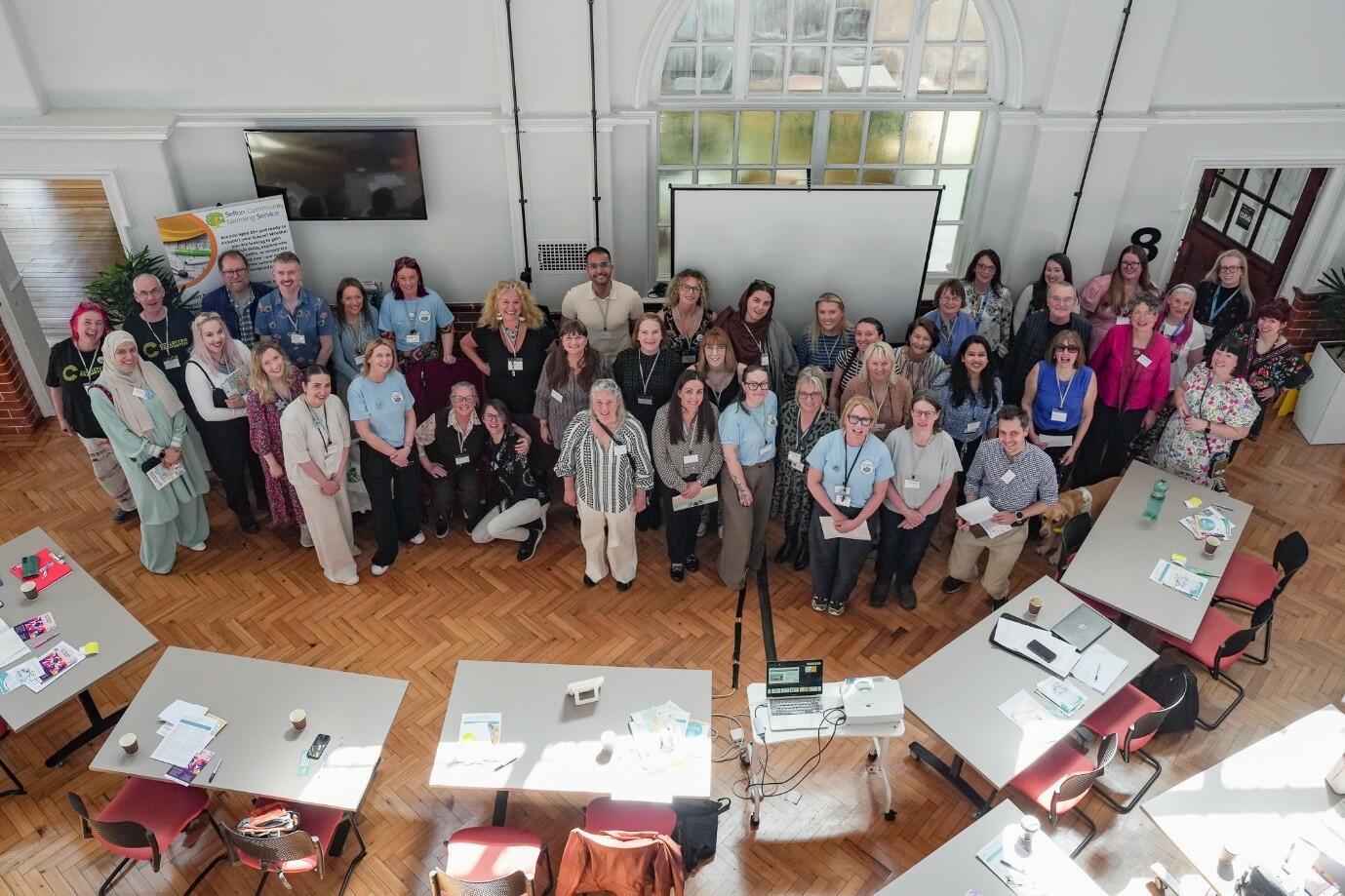
On 30 April 2026, Vicki Doyle, from Capacity Development International, welcomed community organisations, artists, health professionals, researchers, voluntary sector leaders and residents to South Sefton Adult Education Centre for the first ReCITE Learning Event in Sefton. It was a vibrant and inspiring day focused on creativity, storytelling, partnership and health equity. It was kicked off by a moving ‘dementia monologue’ by well-known Liverpool actor Eithne Brown.
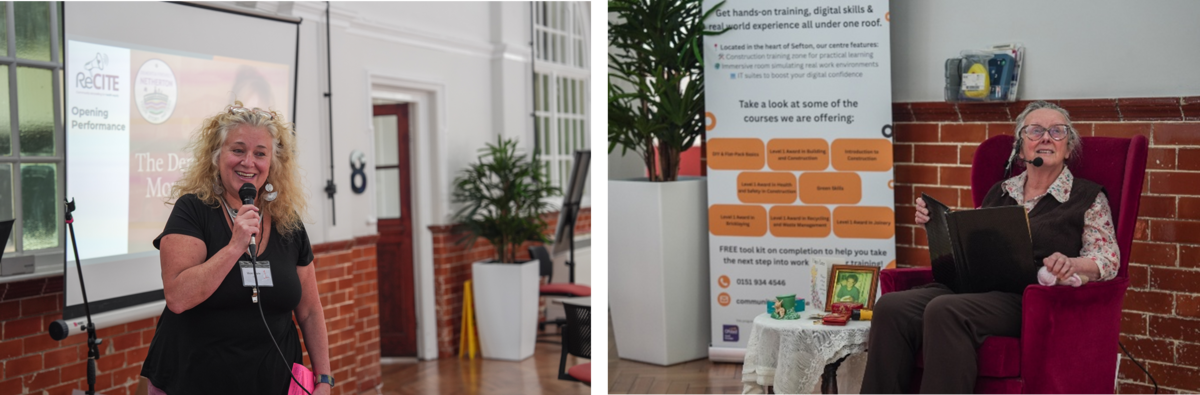
Left: Vicki Doyle, Capacity Development International; right: Eithne Browne. Photos: LSTM
The event showcased how Community Innovation Teams (CITs) are using community-led creative health approaches to tackle avoidable and unfair differences in health through hyperlocal action, collaboration and lived experience.
Throughout the day, one message came through clearly: improving health outcomes requires more than health services alone. It requires trust, relationships, creativity and genuine partnership with communities.
Opening remarks from Rory McGill, the Director of Public Health, set the tone for the day, highlighting the importance of “people before patients” and the need to work with communities rather than “doing things to them.” He reflected on the power of storytelling as one of the oldest forms of human communication and emphasised the importance of creating opportunities for communities to shape the solutions that affect their lives.
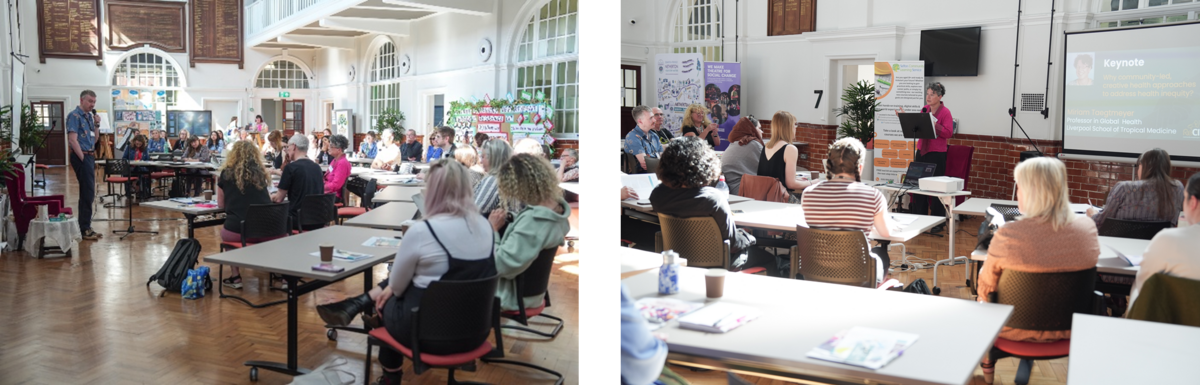
Left: Rory McGill, Director of Public Health at Sefton Council; right: Miriam Taegtmeyer, LSTM. Photos: LSTM
The keynote from Miriam Taegtmeyer (Liverpool School of Tropical Medicine) explored how storytelling, creativity and connection can help address widening health inequities and rebuild trust between communities and systems. Speaking about the role of Community Innovation Teams, she reflected: “they provide a practical framework for making neighbourhood approaches a reality.”
The event highlighted the growing momentum behind creative health approaches within neighbourhood health systems and the importance of moving beyond siloed and short-term ways of working.
Three Community Innovation Team projects were showcased during the event:
- Dementia Friendly Netherton
- Writer in Residence Programme, Aintree Hospital Emergency Department
- Comics Youth and CAMHS work supporting young people’s mental health
Together, the projects demonstrated how creative methods can support more meaningful engagement, reduce stigma, strengthen relationships and create safer spaces for people to share experiences that may otherwise go unheard.
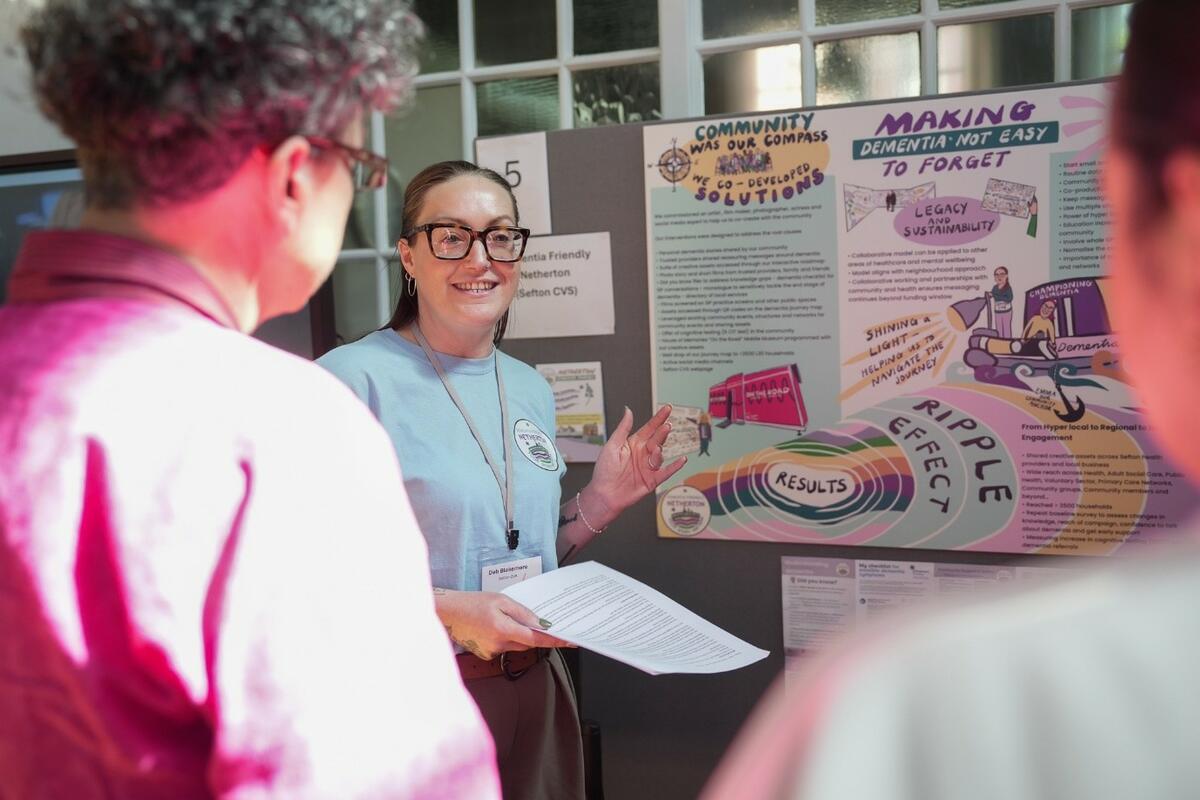
Deb Blakemore, Dementia Friendly Netherton CIT. Photo: LSTM
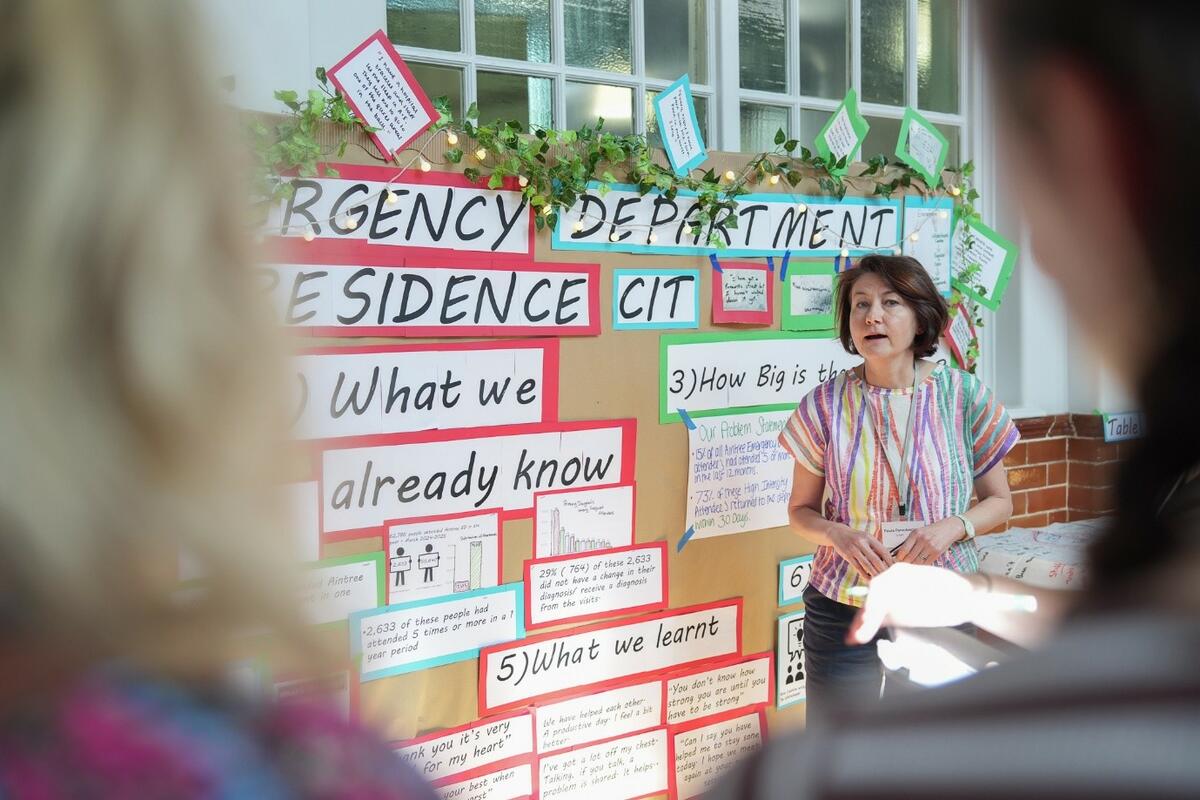
Paula Parvulescu, HIU A&E Department Aintree Hospital CIT. Photo: LSTM
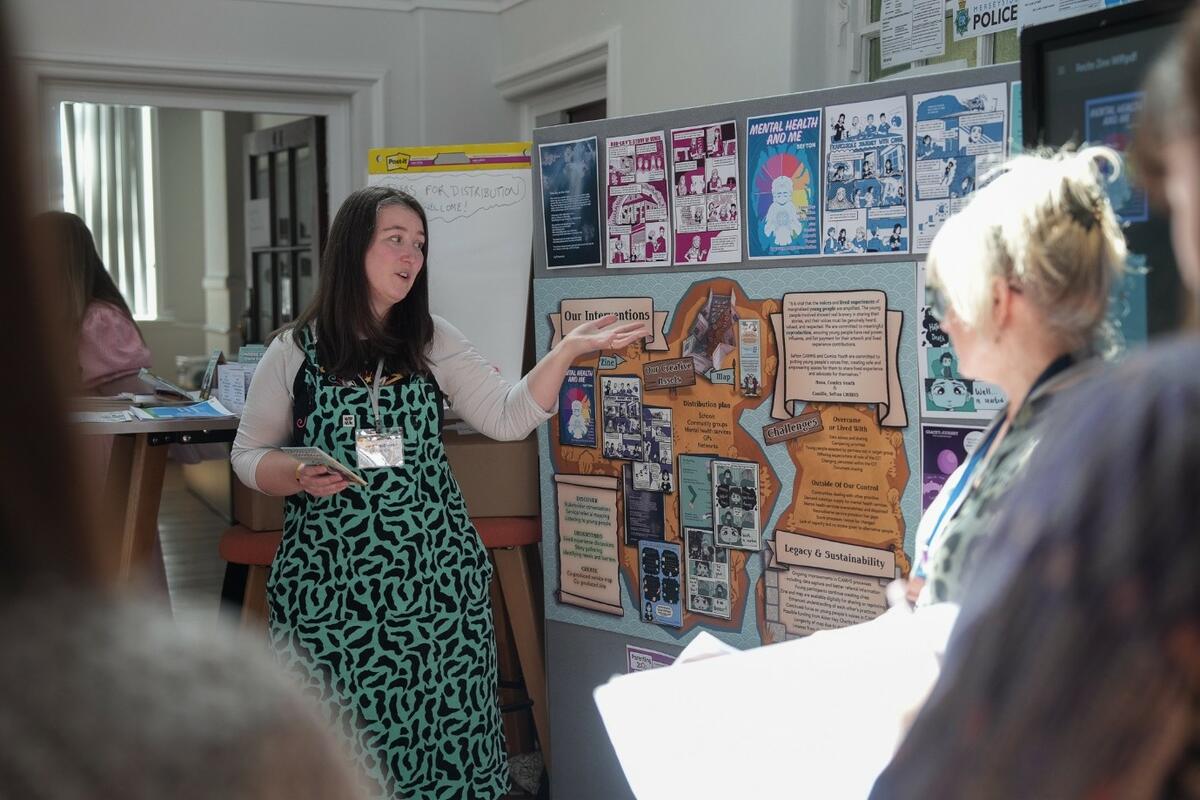
Anna Macdonald, Comic Youth and Sefton CAMHS CIT. Photo: LSTM
A particularly powerful theme throughout the day was the role of trusted community spaces and relationships. Emma Anker from the L30 Community Centre, described community centres as “health hubs naturally,” highlighting the importance of meeting people where they already feel safe, valued and connected.
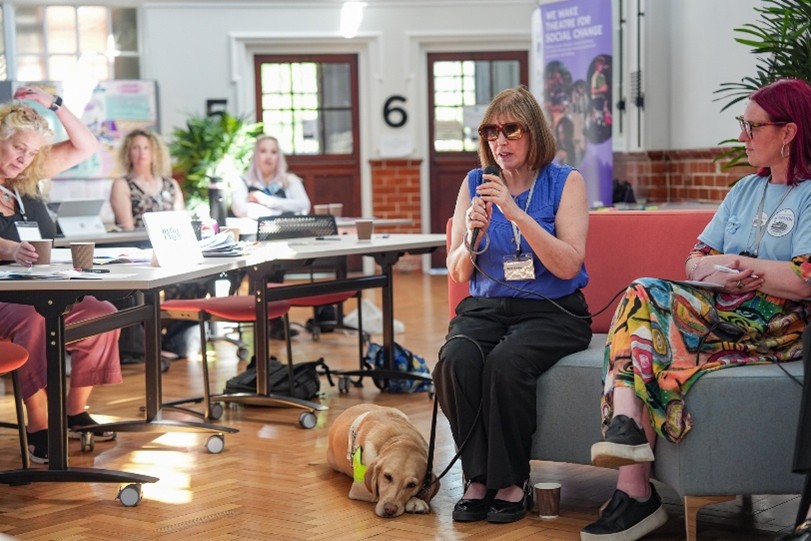
Mandy Redvers-Rowe, Writer in Residence, Aintree Emergency Department. Photo: LSTM
Creative practitioners involved in the projects also reflected on how arts-based approaches can shift power dynamics and create more equal conversations between communities and professionals. Mandy Redvers-Rowe, ReCITE’s writer in residence at Aintree Hospital Emergency Department, spoke about the ability of creative practice to “give people dignity and humanity back,” while discussions around youth engagement reinforced how visual and creative approaches can help young people communicate more openly, particularly in mental health settings.
The afternoon panel discussion explored how the CIT model could help shape future neighbourhood health approaches locally and nationally. Participants spoke candidly about the limitations of traditional engagement methods, the risks of short-term ‘projectitis’, and the need for systems to genuinely listen to communities and embed co-production more meaningfully.
The day had a strong sense of optimism and possibility. Speakers repeatedly returned to the importance of collaboration, trust and long-term relationship building as essential foundations for healthier communities.
As the event closed, one quote captured the spirit of the day perfectly: “Stories are data with soul.” (Brené Brown - researcher and storyteller)
The first ReCITE Learning Event in Sefton was not only a celebration of innovative practice and partnership working, but also a powerful reminder that communities already hold knowledge, creativity and solutions. The challenge now is ensuring these approaches continue to grow, influence systems and become embedded within the future of neighbourhood health and wellbeing.
Or, as Miriam Taegtmeyer reflected: “We need a movement, not a moment.”
|
ReCITE is funded by the Arts and Humanities Research Council (AHRC), part of UK Research and Innovation. |
 |

Join our LinkedIn(link is external)(opens in a new tab) community.